
From Military to Civilian: Ultra-Wideband Radar Technology Unleashes 'Superpowers'
In late April, the National Intellectual Property Administration announced the first batch of excellent patent transformation cases for 2025, highlighting 20 innovative and high-impact conversion projects nationwide. Central South University made the list with its "Industrialization of Micropower Ultra-Wideband (UWB) Radar Patent Technology," the sole representative from Hunan Province.
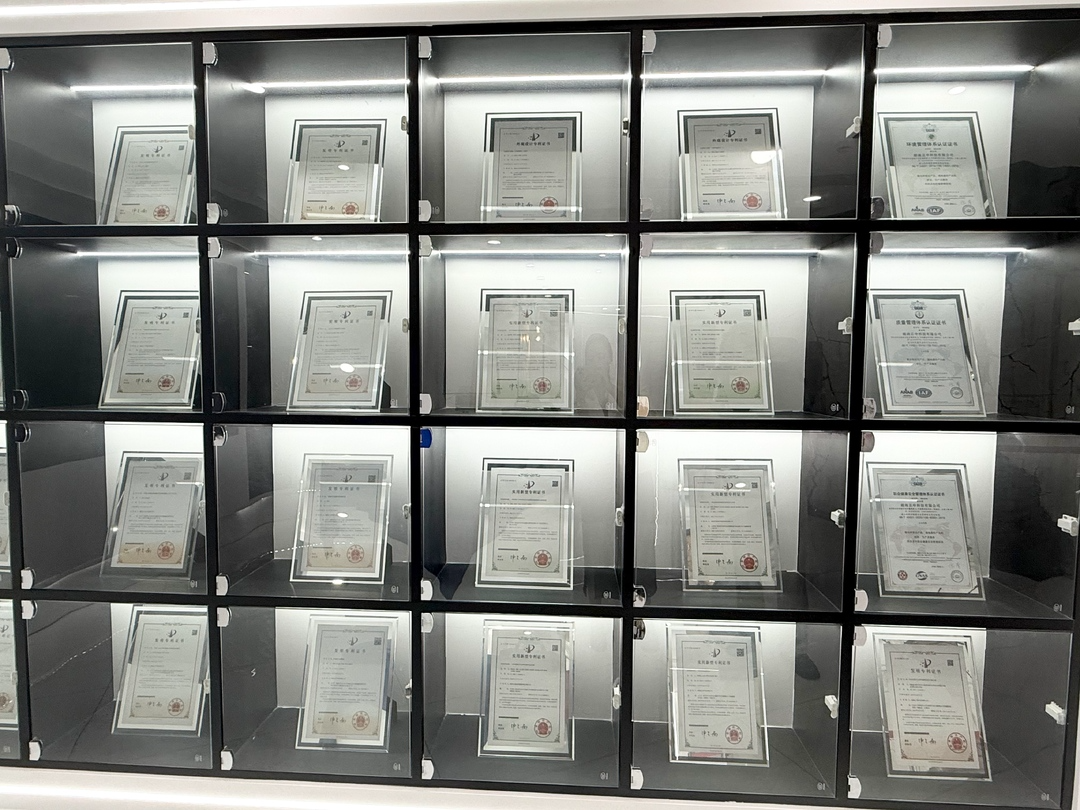
Part of the Patent Technology
From the 'Bookshelf' to the 'Shelves': 20 Years of Persistence and Passion
Universities hold vast high-value patents, often called "intellectual property rich mines," yet many remain unused due to low conversion rates.
"Only transformed scientific achievements become real productive forces," said Professor Liang Bugé, leader of the "Micropower UWB Radar Patent Technology Industrialization" team at Central South University. The journey from science to technology to economy has been bumpy, but the technology is now on track, gradually expanding into emergency rescue, healthcare, industrial inspection, and other fields, creating tangible economic value.
Over 20 years ago, Liang Bugé studied UWB radar technology at the National University of Defense Technology, where it was exclusively used in military applications like detecting enemy "stealth aircraft." During his PhD, he pioneered the idea of civilizing the technology for disaster relief, counter-terrorism, and public security.
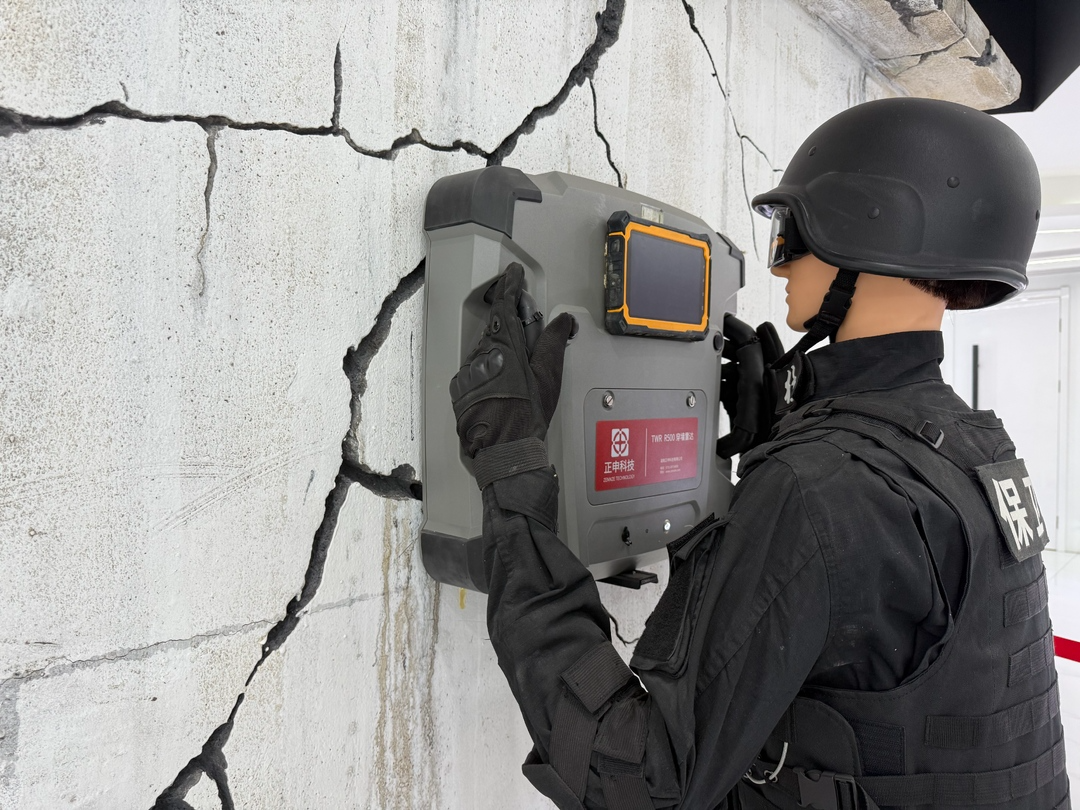
Application Scenarios of the Third-Generation Life Detector
These fields share a common goal: locating "stealth targets." While radar easily monitors fast-moving large objects, detecting "close, small, slow" targets like trapped victims under earthquake debris requires solving penetration and resolution challenges.
Micropower UWB radar holds unique technical advantages here. During the 2010 Yushu earthquake, the first-generation life detector developed with this technology aided rescues, successfully saving two trapped individuals. Chinese leaders on-site praised the technology, prompting the Hunan Fire Department to adopt and promote it, gradually commercializing the product.
At the time, societal awareness of intellectual property’s commercial value was low, and university patent transformation lacked policy support. Many inventors, constrained by public service identities, had to collaborate informally with enterprises, leading to unclear property rights and unfair distribution—a major hurdle for university IP conversion.
Liang’s team faced similar issues and stumbled twice in partnerships: they created hundreds of millions in output but failed to secure contracted rights, even getting embroiled in lawsuits.
In 2000, Central South University boldly introduced the "Two 70%" policy: 70% of shares from technology-based intangible assets would go to researchers, and 70% of remaining research funds invested in tech companies would belong to project teams. This broke traditional norms, leading national university IP management reforms.
This policy fueled entrepreneurship near Yuelu Mountain. Liang left the military to join Central South University, launching a third venture focused on industrializing micropower UWB radar patents. Hunan Zennze Technology was founded, and in 2024, Central South University invested 100 million yuan in the company via patent valuation.
'Wall-Penetrating Ears' and 'Intimate Guardians': Superpowers with Commercial Might
In late March, a 7.9-magnitude earthquake struck Myanmar, and Chinese rescue teams rushed to help. The Changsha Yuelu Blue Sky Rescue Team, equipped with Zennze Technology’s third-generation life detectors (donated by the company), quickly located survivors, aiding successful rescues.
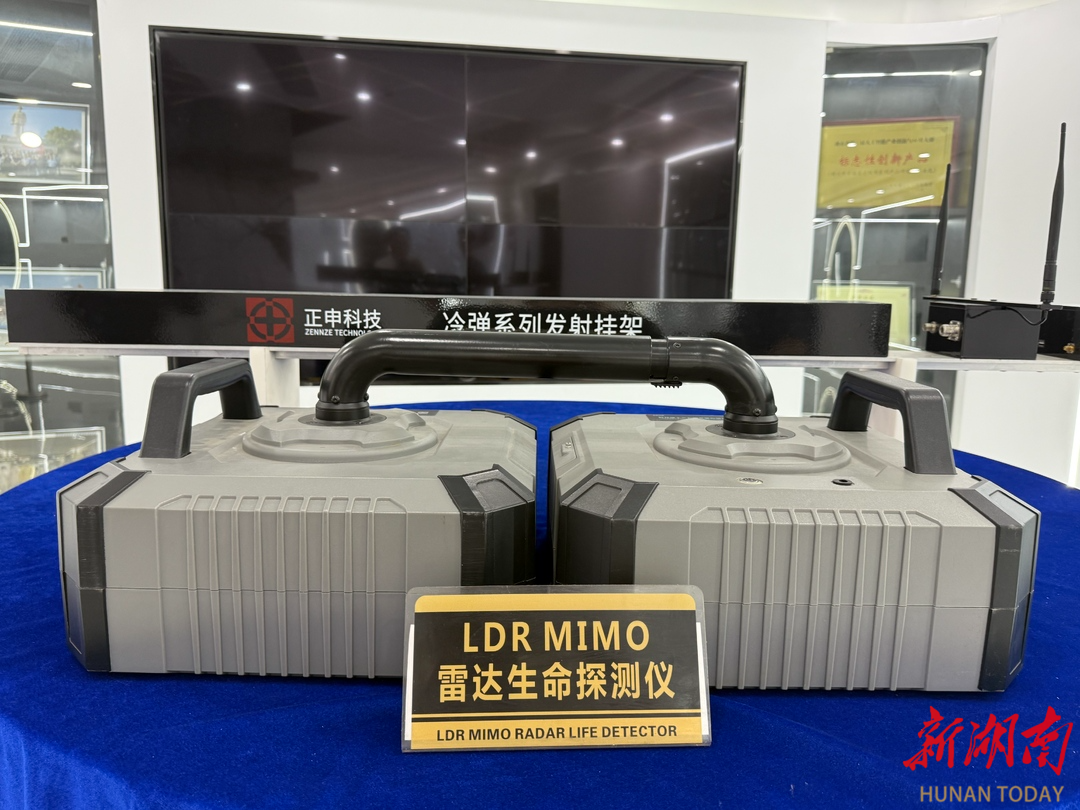
Third-Generation Radar Life Detector
One of the "Micropower UWB Radar Patent Technology" achievements, this detector has gone through three iterations, resolving penetration and resolution challenges. In Zennze’s lab, it can locate targets behind 30cm-thick reinforced concrete walls in 12 seconds, penetrate up to 20 meters, and offer precise positioning.
"We aim to deploy the best radar technologies to the frontlines of rescue as quickly as possible," Liang said. Last year, radar technology transformation generated tens of millions in output in emergency rescue, with promising markets in healthcare and industrial measurement.
A palm-sized sensor placed by the bed uses radar to monitor users’ physical states: it triggers smart home devices (e.g., turning off lights, drawing curtains, adjusting heating) when detecting sleep and auto-alarms for emergencies involving elderly senior.
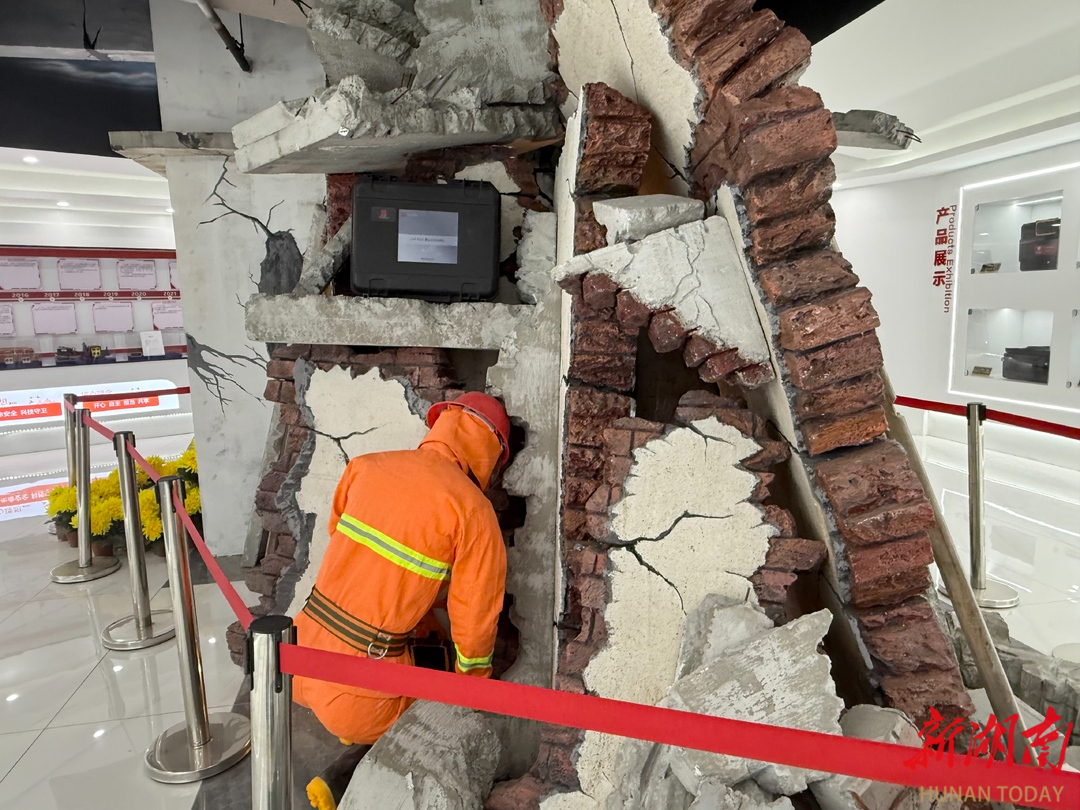
Simulated rescue scene
In the healthcare sector, UWB radar technology may enable human-machine interaction without voice commands, acting as an "intimate guardian" for daily health. Currently, sensors based on the "micropower UWB radar patent" are being tested in collaborations with China Mobile, China Unicom, China Telecom, Ping An Group, and Haier.
In industrial inspection, special steel testing equipment remains a bottleneck technology. Zennze is partnering with Yuhe and Xi’an Heavy Machinery Research Institute to apply UWB radar to special steel inspection, enhancing independent innovation. Plans for two production lines this year aim for 50 million yuan in output.
"Patent transformation is an ongoing journey," Liang noted. "Leaving technology entirely to companies risks failure. The best model is for universities to guide while enterprises execute, turning research into real-world economic impact."
Zennze’s growth has drawn high-level attention from provincial and municipal governments. In 2024, the company acquired 18.5 mu of land in the high-tech zone to build a science park and expand production. Now in its second round of financing, the company is valued at 800 million yuan. Guided by Hunan’s government, Liang is also advancing new engineering education reforms: the Shenghua Innovation Class, launched in 2024, recruits university-wide to cultivate innovative and entrepreneurial talents.
2025 marks the final year of the National Intellectual Property Administration’s "Three-Year Action Plan for Patent Transformation." Changsha has prioritized university IP conversion, completing the first national inventory of patent stocks in universities and research institutions and introducing measures to boost transformation. In 2024, the city saw 10,091 patent transfers/licenses, with Changsha universities converting 684 patents worth over 800 million yuan—turning academic patents into tangible "commercial power."
Source: Hunan Daily · New Hunan Client
